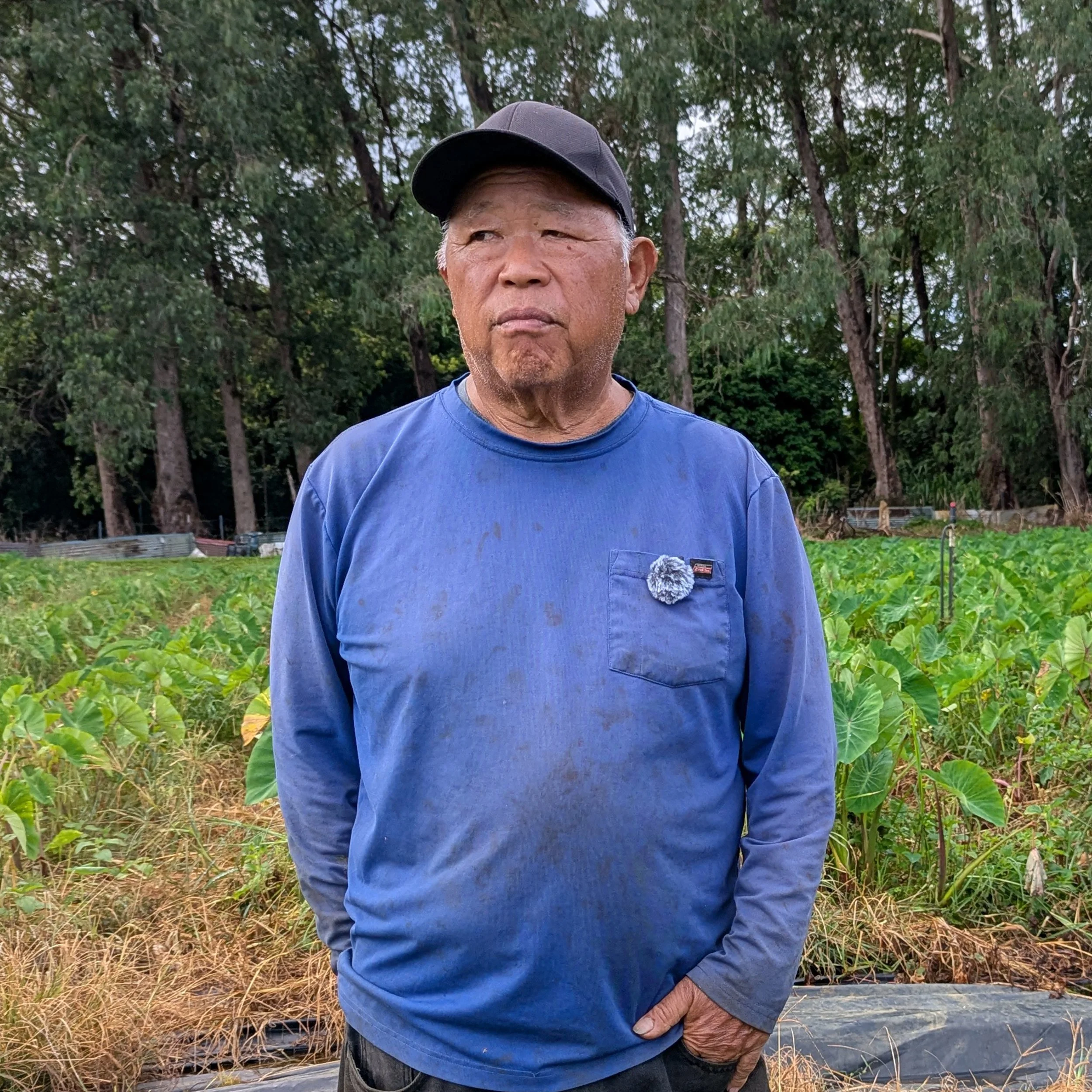
About the Farm
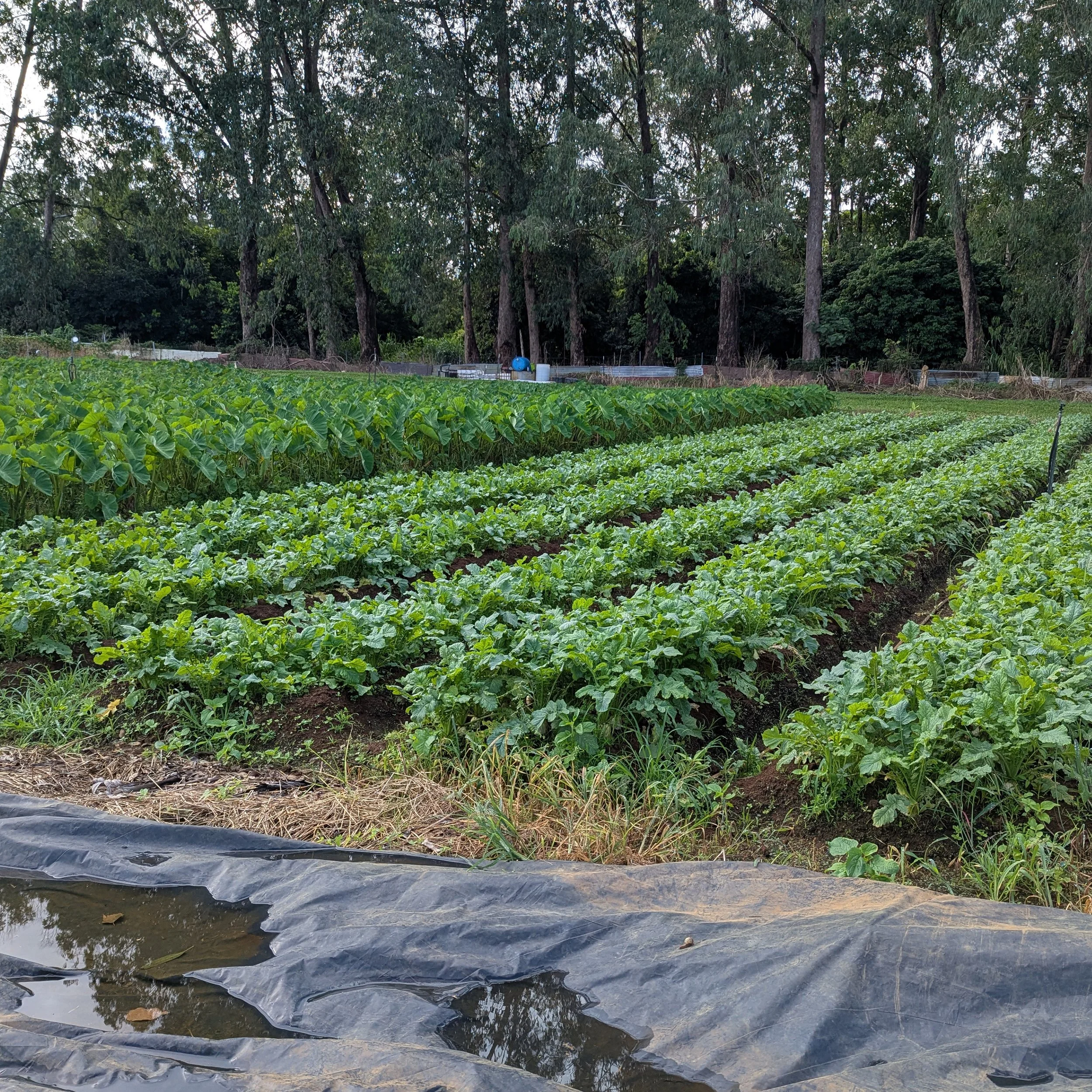
Big Island Farms, operated by Derrick Araki, grows kalo (taro) and daikon on 3.5 acres of leased land in the Pāhoehoe Farm Lots on Hawaiʻi Island. Derrick began farming there in 2013 after retiring, but his connection to agriculture goes back to his childhood in Waipiʻo Valley, where he helped his family cultivate kalo.
For Derrick, growing kalo is about more than producing food. It is a way of honoring Hawaiian agricultural traditions and the cultural connection between people and the land. Today, he primarily grows kalo for its leaves, harvesting approximately 50 pounds per week, along with daikon for local food businesses.
The Challenge
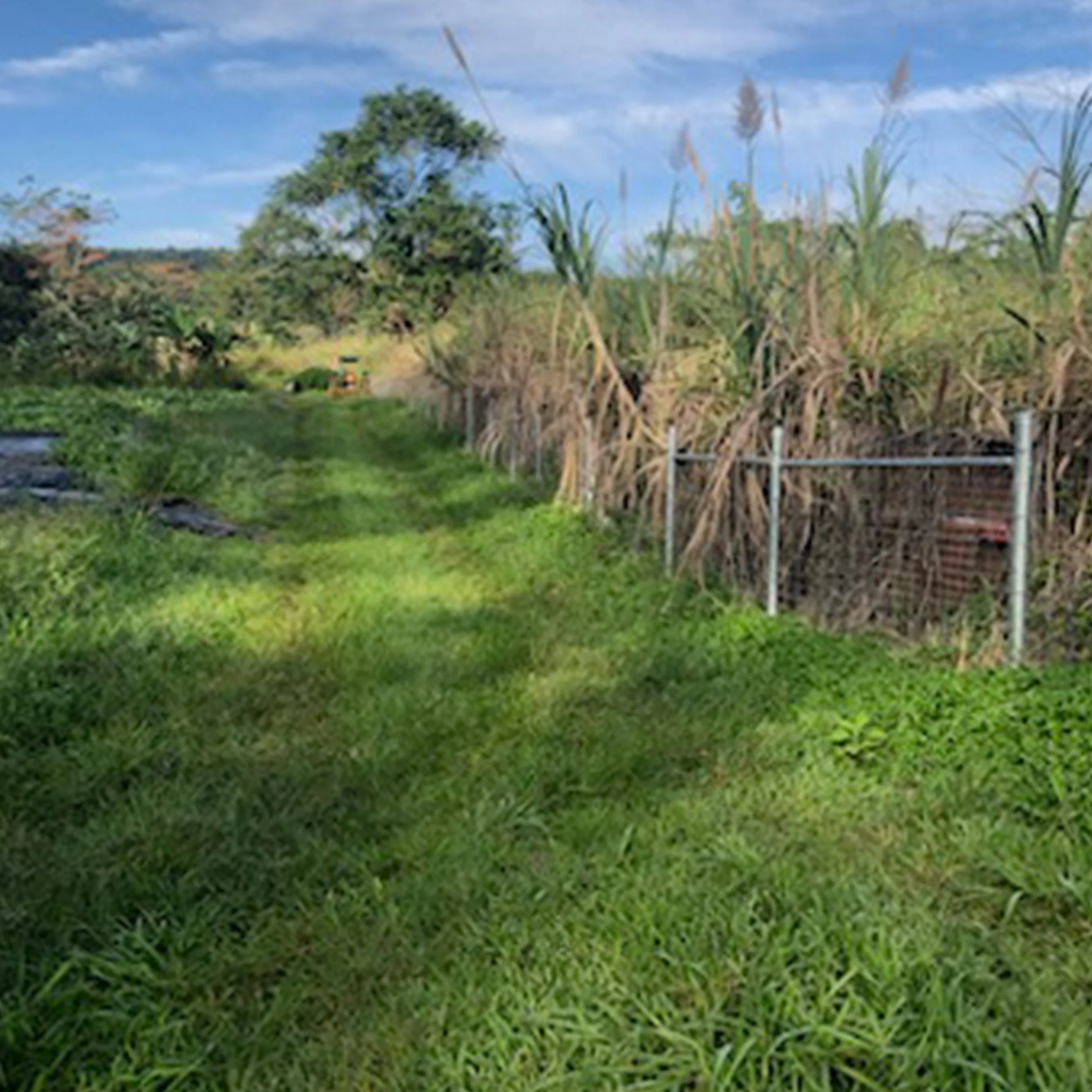
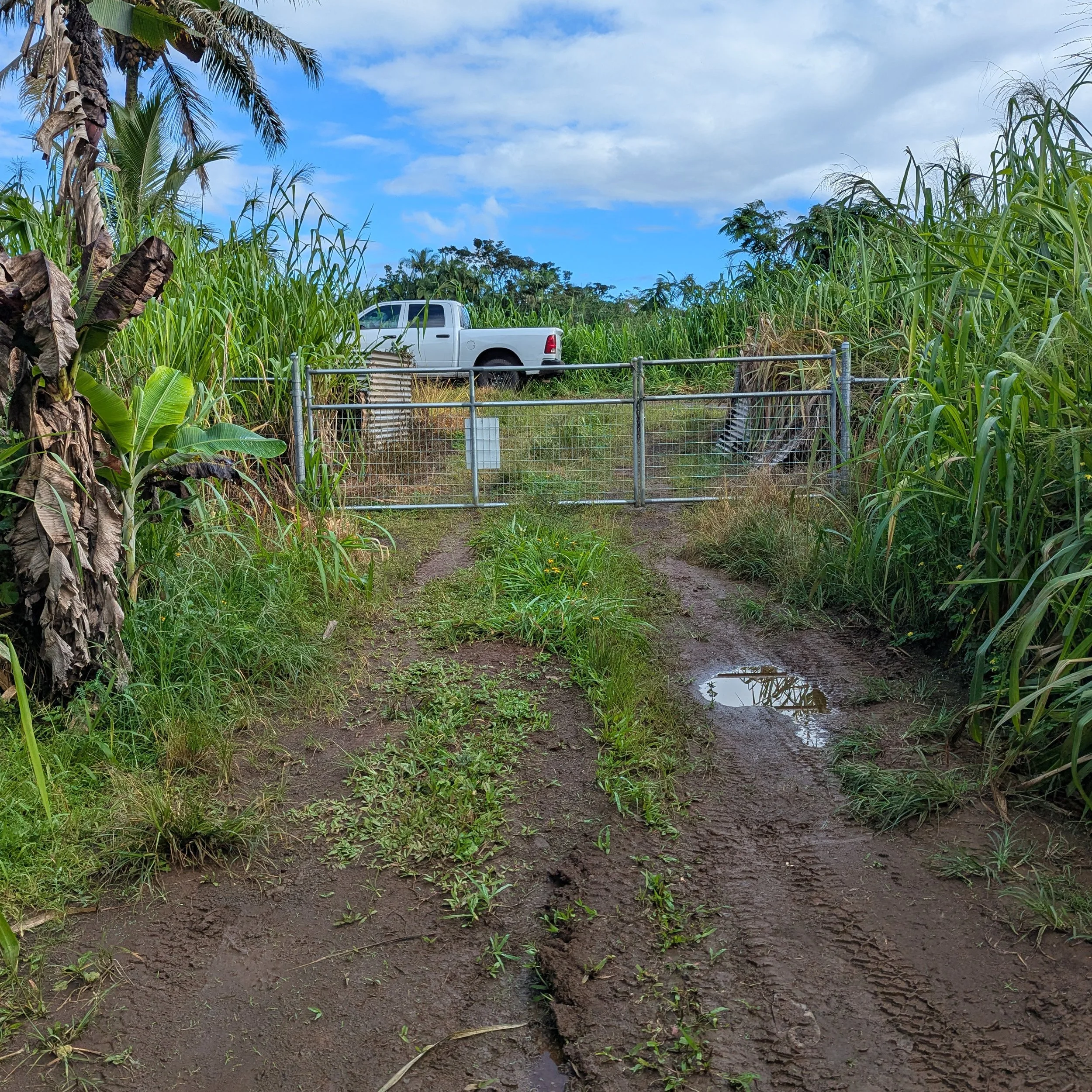
Feral pigs have become one of the greatest threats to Derrick's farming operation. Breaking through aging fences, they dig up kalo plants, damage huli needed for replanting, and trample young daikon crops. Their activity also introduces weeds and invasive pests, creating additional maintenance challenges.
Alongside damage from pigs, Derrick faces taro leaf blight, birds feeding on young seedlings, trespassing, and rising production costs. Constantly repairing fencing and maintaining the property takes valuable time and resources away from growing food.
How Mālama Da Farmer Grant Helped
The Mālama Da Farmer Grant supported Derrick's efforts to strengthen farm security and protect his crops from feral pigs and trespassers. His project focused on reinforcing the farm's perimeter with new fencing, posts, and gates to replace vulnerable sections of the existing barrier.
The grant project also included equipment rental, installation labor, and agricultural inputs to support crop health and field maintenance. Together, these investments were intended to reduce crop losses, protect existing production, and allow Derrick to focus more of his time and resources on farming.
Impact
Stronger fencing and improved crop protection will help Big Island Farms reduce damage from feral pigs, preserve valuable planting material, and maintain more consistent kalo and daikon production.
With fewer crop losses, Derrick hopes to increase production and expand sales to local food businesses, including Honda Foods and other community outlets. He is also exploring more natural farming methods, including Korean Natural Farming practices, to improve soil health and reduce reliance on chemical inputs.
By protecting his farm and continuing to grow culturally significant crops, Derrick is helping preserve Hawaiian agricultural traditions while contributing fresh, locally grown food to the community.
Hear Their Story
Hear from Derrick Araki about his family's farming roots in Waipiʻo Valley, the challenges of protecting crops from feral pigs, and how the Mālama Da Farmer Grant is helping him sustain Big Island Farms.
Video by Nixon Jack