
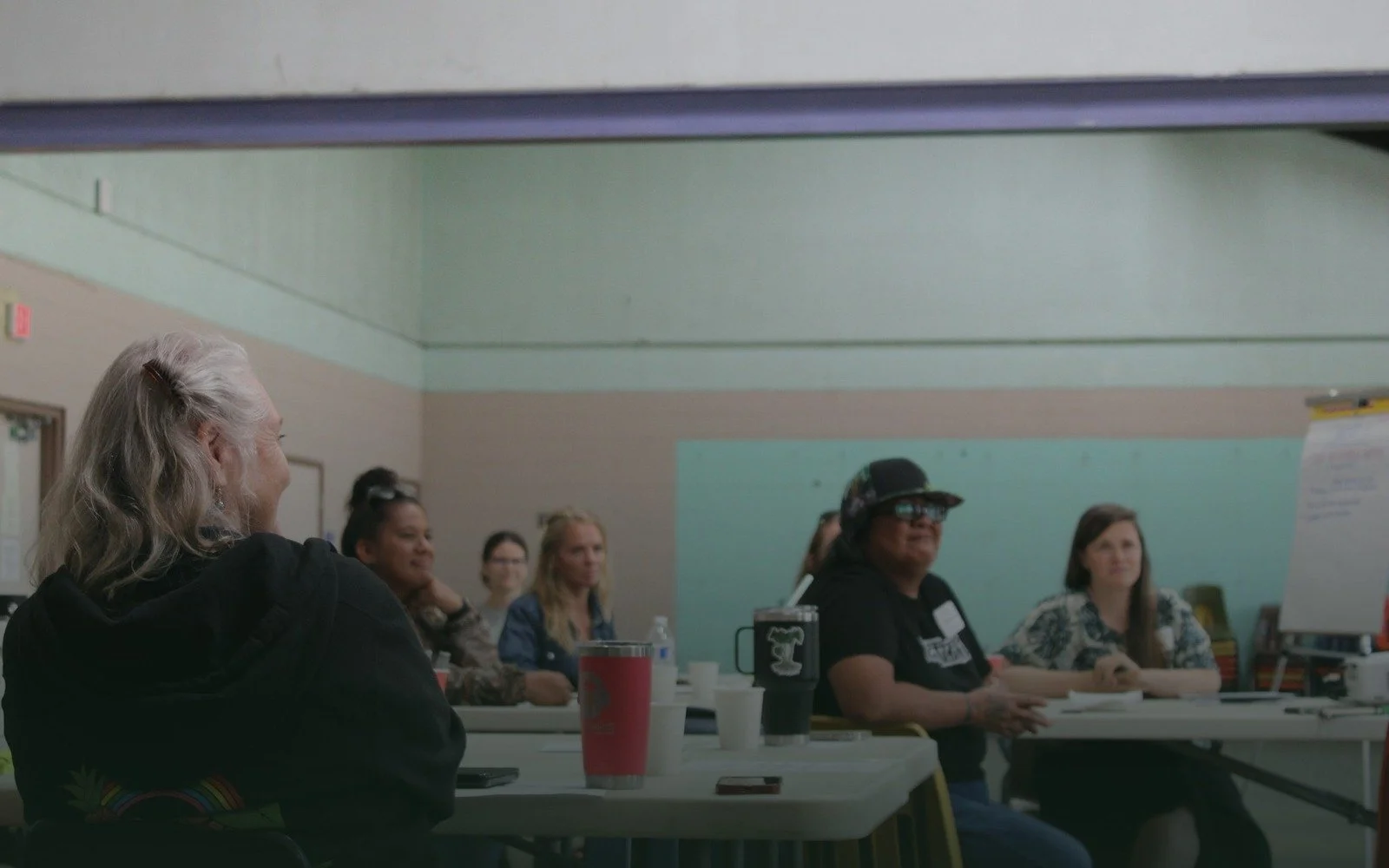
A Community Food Security Project regional meeting in 2025.
In Kaʻū, eight of the 16 people who answered a food access survey said they travel more than an hour each way to get food.
That finding is in the new Hawaiʻi County Food Security Report. The County of Hawaiʻi Department of Research and Development released it this month, alongside its five-year Agrifood System Plan. We prepared the report with the County.
From 2023 to 2025, 902 residents filled out the Community Food Access Survey. Fifty-five organizations came to regional meetings in Hilo, Kaʻū, Kona, Puna and Waimea. Another 140 people joined focus groups in eight districts, and 27 sat for one-on-one interviews, kūpuna, homebound and immigrant families, and people in recovery among them.
The report is careful to say these numbers do not stand in for every household on the island. Four ways of asking came back with the same answers.
What people said
Getting food is harder than it was. Of the people surveyed, 41.3% said food access got worse since COVID. Another 42.6% said it stayed the same.
Residents on SNAP said benefits ran out after two or three weeks. Parents cut their own meals so their children could eat.
There is less in the cupboard, too. In 2025, 30.5% of people surveyed had no emergency food at home, up from 17.5% in 2023. In North Hilo it was 52.8%.
And every region named transportation. 83.5% of people surveyed use a car as their main way to get food. Fifteen organizations island wide offer any help with transportation. None of them are in Hāmākua or North Hilo.
Two refrigerated vehicles
The 55 partner agencies and service providers at the regional meetings reported two refrigerated vehicles among them. They said the island needs 33. That count covers the organizations in the room, not every refrigerated truck on the island.
Refrigerated vehicles were a first or second priority in every district but one. Fresh local fish was the food people asked for most, in every region, and fish needs a cold truck to travel.
Our Executive Director, Kristin Frost Albrecht, told Big Island Now that trucks are only part of it. The island already has “a shortage of qualified refrigeration repair technicians,” she said, and more trucks will need people who can keep them running.
What the report asks for
At the top of the list: a refrigerated vehicle for each district, agricultural processing in Puna, North Kona and Kaʻū, and operating funding that lasts more than one year.
Next come more cold storage in Puna and Kaʻū, transportation help and home delivery for kūpuna and homebound residents, programs that teach cooking and preserving food, and funded coordinators at the district level.
Some of this has started. Last December, the County and The Food Basket awarded $500,000 in Community Food Security Project grants, with priority on cold, dry and freezer storage. A refrigerated trailer for Hope DIA-Mend Ministries is one of the things those grants paid for.
Communities already told us what they want to build: cold trucks, kitchens, and places to process what they grow. It takes equipment, coordination, and funding that outlasts a grant cycle.
In Kaʻū, the drive is still more than an hour each way. Now it is on the record, with a list of what would bring the food closer.
Mahalo to the 902 residents, the 55 organizations, and everyone who sat in a focus group or an interview. This report is what you told us.